

The Yoga Sutras of Patanjali, a foundational text of yoga philosophy, offers a comprehensive guide to achieving balance, harmony, and peace through the 8-limbs. While primarily designed for spiritual enlightenment, the principles in the sutras can be integrated into everyday self-care practices for beauty. Ultimately, the sutras teach that true beauty emanates from inner balance. In this case, spiritual teachings can have practical application in our day-to-day lives, especially our self-care routines.
Yamas
In staying consistent with the principle of Ahimsa (non-violence), we direct ourselves away from harming others and ourselves to the best of our ability. This means choosing cruelty-free and environmentally friendly products that do not harm animals or the planet. Although most of us do not hold much power over policies that contribute to the most violence against a variety of earth’s creatures and the pollution of our environment, we can take some small steps to protect our own karma by preserving the beauty around us. Additionally, we can apply the principle of non-violence to ourselves by avoiding harsh treatments and procedures.
Through the principle of Satya (truth), we can embrace our natural beauty. The makeup we wear and the skin procedures we choose should not mask our self-acceptance. Most of us do not require nose jobs or other body modifications. Beauty and the feeling of beauty come from within. No amount of money spent on modifications will fill the hole if we feel inherently unbeautiful. The capitalist market dictates that we should look for a sure way to fit in or to be happy. This is simply not the case. In fact, the inverse may be true: the less we have, the more happy we can be. Just as happiness may not necessarily be measured by how much we have, the effort we put into ourselves may not make us feel beautiful if we inherently do not feel it.
The principle of Asteya (non-stealing) reminds us not to “steal” time, energy, or resources unnecessarily. We should avoid excessive comparisons with others or unrealistic beauty ideals that lead to more dissatisfaction. Social media makes this very hard for us as we are in a constant stream of aesthetically “perfect” “- looking people. To stay grounded, look at how many of these aesthetically “perfect” people exist in real life. Chances are there are fewer of them compared to social media. This is because what we see on social media is not real life. Everyone is simply human. This principle calls us to cultivate gratitude for our own features. We are all different, and everyone is beautiful in their own way. The sooner we stop worrying about the small trifles, the sooner we can enjoy our lives.
Furthermore, the Yama of Brahmacharya (Moderation) inspires balance and mindfulness regarding self-care. Yes, it is okay to wear makeup and get a facial. It is okay to care for our physical bodies. It only becomes problematic when so much energy is exerted on beauty that other aspects of your life begin to suffer. Going into depth due to Sephora hauls or getting plastic surgery are great examples of when balance becomes lost.
Lastly, the last Yama, Aparigraha (Non-possessiveness), teaches us to simplify our routine by using fewer higher-end products instead of hoarding in excess or buying the La Mer creme. The minimalist approach prevents being overwhelmed and helps people to focus on what matters in life. Too many physical things often translate into too many things in our minds. Self-care products are just that – things.
Niyamas
The first Niyama of Shaucha (Cleanliness) prioritizes hygiene and cleanliness in your skincare regimen. Regular cleansing, exfoliating, and hydration of the skin keep it healthy. Similarly, as we are constantly growing and evolving, the beauty cleansing rituals can symbolize the letting go of the old and the beginning of the new. Each morning, as we wash away the lucid adventures of the night, we prepare for a productive day. Each evening, as we wash away the day’s worries in preparation for the renewal while we sleep, we say goodbye to our old selves. Society likes to conflate women’s self-care rituals as signs of shallowness or narcissism (as part of a greater spiritual war against women). Still, these self-care rituals can be spiritual practices in and of themselves. Being the Yin energy closer to the spiritual realm, the woman prepares herself. In many religions, the washing symbolizes the start of a spiritual practice. As the ancient priestesses before these times. Remnants of ancient rituals made it to this day.
The principle of Santosha (contentment) allows us to cultivate gratitude for the skin and body that we already have. Our meat suit is a beautiful and temporary creation meant to be enjoyed. Cultivating gratitude daily is key. Instead of trying to be perfect like celebrities, we should focus on our unique and natural features, enhancing them while finding ways to make the process joyful.
Tapas (Discipline) teaches that consistency is key. Stick to a beauty routine that you can do every day. A simplified routine will allow you to stay consistent. Discipline is challenging to achieve. Social media and modern society have trained many to receive rewards with minimal input. We expect fast results. Sure, one can use surgery to lose excess fat, but the fat will return if lifestyle changes are not made. Oftentimes, physical issues are caused by underlying spiritual issues. Disciplined training at least 3 or 4 times a week will increase your level of energy, paving the way for healthier choices and greater opportunities in life.
The principle of Svadhyaya (self-study) asks us to understand our unique health needs. This includes knowing what type of skin or hair issue you are dealing with and finding the right ingredients for your concern. We should care about what we ingest, what we put on our skin, and what we wear on our skin. The better care we give ourselves, the better care we can provide to the broader world.
Lastly, the last Niyama of Ishvarapranidhana (surrender) recommends we let go and trust the process. True beauty shines through peace and contentment. No amount of beauty self-care will help if we are constantly worried, stressed, and not happy with how we look.
The third limb, Asana, or physical postures, encourages maintaining a healthy body as a foundation of inner well-being. There is no going around it; no amount of body positivity can outweigh the scientific evidence on the benefits of physical activity. Incorporating yoga poses into your routine enhances blood circulation and brings a natural glow to your skin. Poses like Downward Dog, Child’s Pose, and Fish Pose can relieve stress, improve posture, and oxygenate your skin. Facial yoga also tones muscles reduce tension and supports youthful skin by facilitating lymphatic drainage. Yoga should be ideally done in addition to an existing fitness routine.
The fourth limb, Pranayama, focuses on breath control. Proper breathing detoxifies the body, reduces stress, and revitalizes the skin. Incorporate and practice alternate nostril breathing (Nadi Shodhana) to calm the mind and reduce anxiety. This is particularly useful during your morning meditation as you center yourself and begin the day.
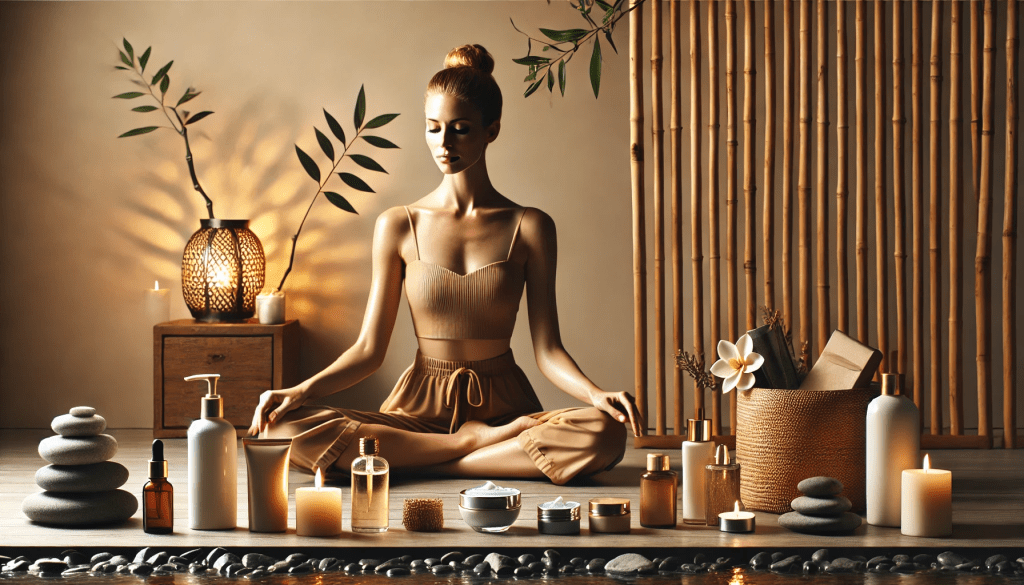
The fifth limb, Pratyahara, or sensory withdrawal, encourages disconnecting from external distractions to turn inward. You may wish to create a spa-like environment for your skincare and body care routine. Light candles, play calming music and focus on the sensations of cleansing, moisturizing, and massaging. This may help you better connect with your body and make the simple routine into a more spiritual and meditative experience. In yoga culture, it is acceptable to create spaces for our meditation practice. We may do the same for our beauty practices. Make it a safe space. Beauty and safety are the epitome of yin energy.
The sixth limb is Dharana, and it is about concentration. It is about being fully immersed in the moment. Through Pratyahara, we can withdraw from the world around us. With Dharana, we move inward more by giving full attention to our self-care rituals. Here, attempt to focus on the texture of your moisturizers, the warmth of the facial steamer, the scent of the serum, the shades, and the variety of colors of your eyeshadows and lipsticks. Color therapy is a beautiful ritual in itself. The variety of colors and techniques allows you to discover yourself. It allows you to express yourself to the world in a unique way. This article focuses on creating and practicing a mindful self-care routine at home. It is worth mentioning that if you choose to go to beauty and med spas, the vibes of the places matter. Before fully committing, try to seek out if you are energetically matched.
The seventh limb of Dhyana focuses on the necessity of meditation. Meditating after your skincare routine helps set the tone for the day. Begin with gratitude, set your intention, and allow your light to emanate. Calm nerves will make you less stressed. Lang-lasting peace and confidence can also be a habit, just like worry or stress.
The eighth limb of Patanjali is that of Samadhi; it represents a state of bliss and unity with the self. It reflects the realization that beauty arises from within. This is the recognition that beauty is not confined simply to physical appearance but is the reflection of inner peace, kindness, and confidence. By aligning your self-care routine with the principles of the Yoga Sutras, you cultivate an overall holistic approach.
 LUX PHARI YOGA
Leave a comment